







About Course
In this program, 5 and 6th-grade students take on the role of young engineers who design and build robotic assistants for scientists. Through a cross-curricular and practically-oriented scenario, children actively participate in a series of educational activities where each mission is linked to the needs of a different scientific field.
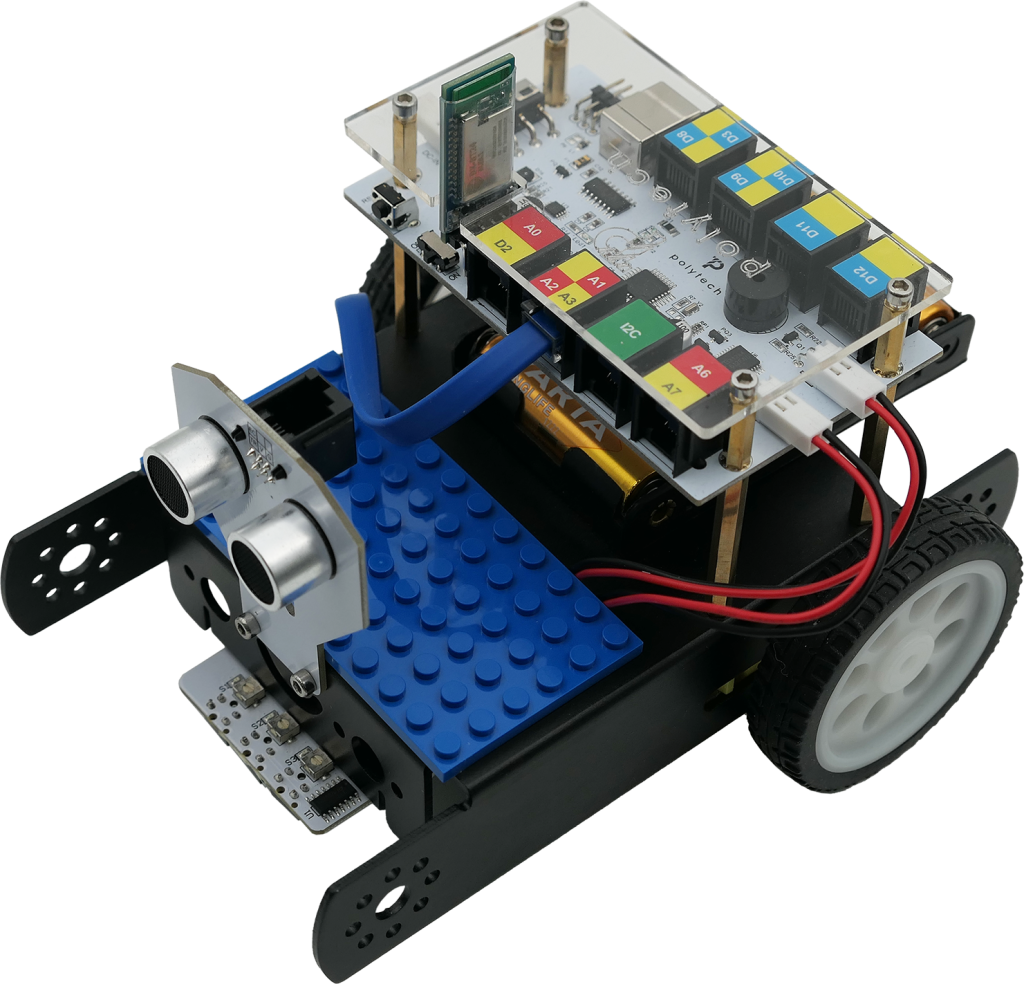
Students work in teams to create mechanical constructions that serve as scientific assistants, such as for a chemist researching solutions, a physicist requiring field measurements, or a doctor needing a medication reminder device. These robotic assistants are not simple structures—they are programmed, react to sensors, communicate via LED or sound, and often “learn” to adapt to stimuli.
The emphasis is placed on the application of technology within scientific contexts, boosting both student imagination and the understanding of the role science and engineering play in solving real-life problems.
Tools We Use:
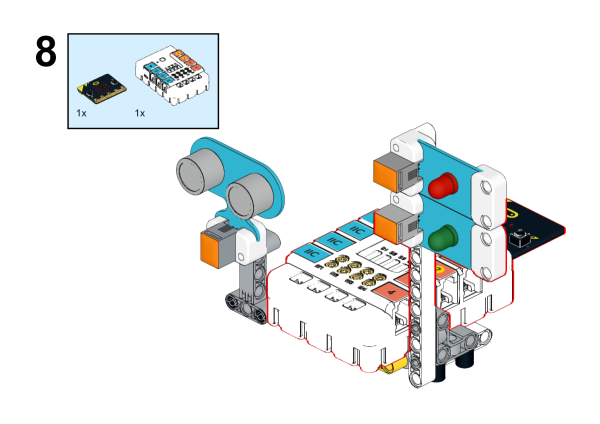
- Micro:bit microcontrollers: Students learn to program in a simple and understandable way, using sensors, LED screens, buttons, and radio communication.
- Building-block type construction materials: These allow for the modular creation of robotic forms, mobile systems, and simple mechanisms.
- 3D design and printing: Students design simple components to expand their constructions or incorporate functional and aesthetic elements.
- Sensors and simple optical systems (AI cameras): An introduction to the concept of image recognition and interaction with environmental data.
Student Benefits:
- They develop technological literacy from a young age.
- They understand the function of sensors, control systems, and programmed commands.
- They activate their imagination and produce original, functional constructions.
- They participate actively in learning processes that build confidence in their abilities.
- They engage naturally with concepts of science, engineering, and artificial intelligence.
- They are inspired by the example of scientists and view knowledge as a tool for change.
Here you will find the parts list.
Course Content
Robotic Laboratory Assistant Part A’
-
Teacher’s Guide
-
Worksheet
-
Presentation
00:00
Robotic Laboratory Assistant Part B’
Sensorts And Measurements Part A’
Sensorts And Measurements Part B’
Distance Measurement and AI Camera Part A’
Distance Measurement and AI Camera Part B’
Measurements of Physical Quantities and Radio Part A’
Measurements of Physical Quantities and Radio Part B’
Sampling and Remote Control Part A’
Sampling and Remote Control Part B’
Machine Learning Part A’
Machine Learning Part B’
Student Ratings & Reviews